Thursday, 3 July 2025

Perendale - New Zealand

The Perendale was developed in the 1950s as a dual-purpose meat and fibre breed for use in steep hill situations by Geoffrey Peren at Massey University in New Zealand.  Peren crossed Cheviot rams on Romney ewes to produce this breed.  Although Perendales were first imported into the USA in 1977, they are still rare in North America.  They are a medium-sized longwool sheep that does well in cold and wet climates.  Both sexes are polled.

The number of this breed has increased since the 1980s because hill-farming has increased and these sheep are perfectly adapted to that kind of terrain.  Rams generally weigh 100kg-118kg and ewes weigh substantially less at 54kg-68kg.  These are very much a commercial breed of sheep that were bred to replace the pure breed Romneys that had deviated from its original type over the years and were no longer doing so great in the hilly areas of the north island of New Zealand, despite the fact that they had been on the land since 1853.  Perendale's are bred for their meat and wool and it is hard to find any really good concise information about them as they are not really the kind of sheep that people take to shows. 


Perendale is a bouncy wool, which will spin up with a spring to it, as opposed to the compact sleekness of English longwools.  This lofty quality can add warmth to sweaters or cushioning qualities to rugs, depending on the fineness of the fibre and your plans for using it.

There are both finer and coarser ranges within the breed, and New Zealand standards have moved toward the coarse end of the scale lately in response to market demands and husbandry realities.  Thus some sheep are producing wools for general knitting yarns whilst others grow fleeces best suited for harder wearing textiles like rugs, bags and upholstery.

Fleece weigh 3.4kg-5kg with staple lengths of 4-6 inches (10cm-15cm).  The fibre diameters are usually 28-35 microns but in New Zealand there is a shift more towards 30-37 microns.

The fibres have even crimp with low lustre and free of kemp or black hairs.  They are usually white, although there are some coloured flocks.  The fleece will take dye well but not with the same clarity that other longwools do and without any shine.  It can be spun straight from the lock, be flicked or combed although if you have a fleece that is short you can card that.  The fibres will capture air and be bouncy, if you are spinning worsted you may need to spin finer than you would usually to allow for bloom.  Yarns will be slightly crisp and will be good for texture stitches and patterns.

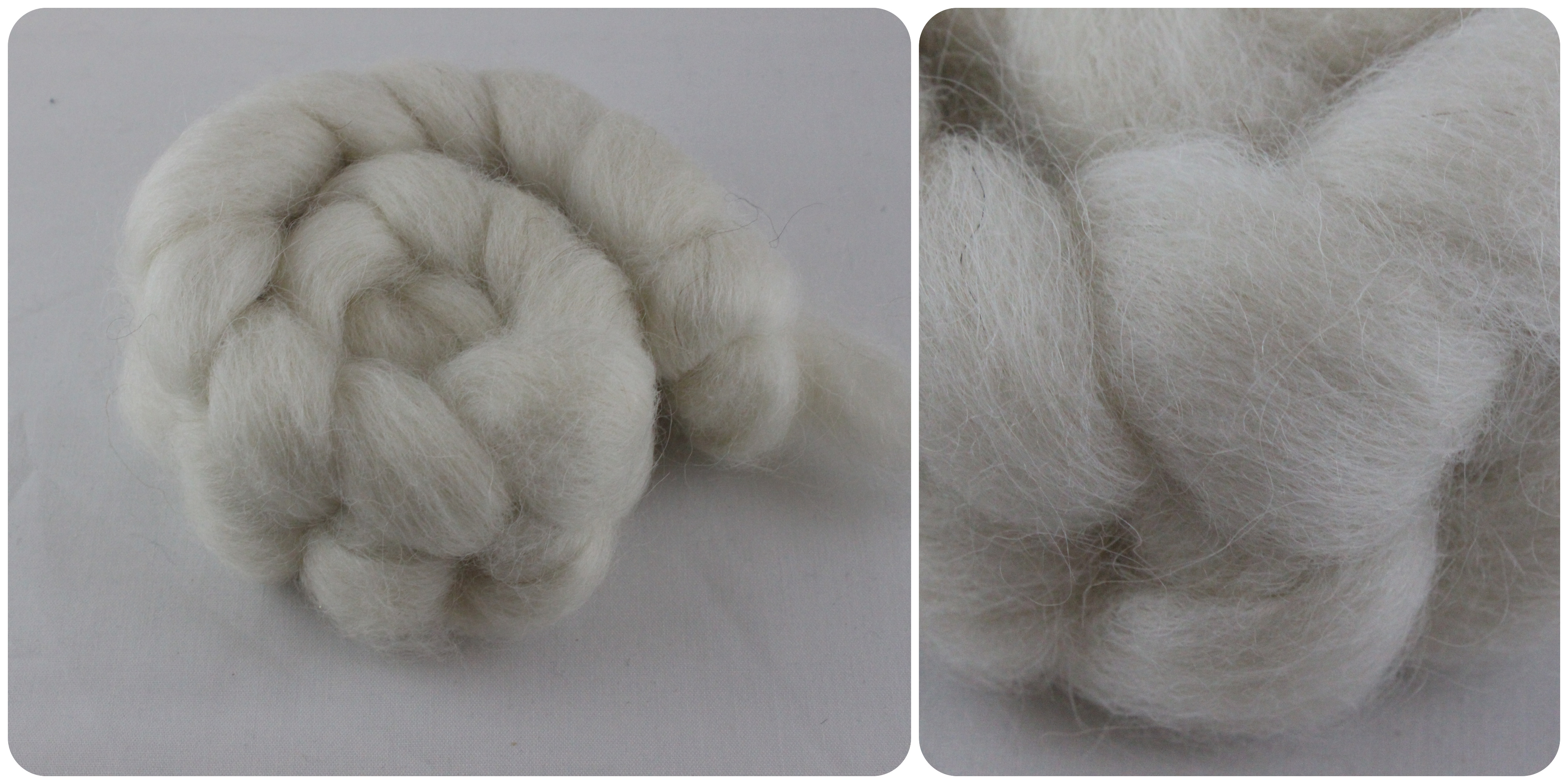
I brought this breed in as 100g of pre-prepared fibre from World of Wool ready to spin in May 2022.


This is another breed that will bounce up after it has been spun and so you have to spin it finer than you would normally spin most other wools to achieve the yarn weight that you desire.  It took me a few days to spin this, as I've not been well, but trying to carry on and do something to stop me from climbing the walls.  So, I started spinning this on 19th June and finished it on 21st June.


It spun up as a 16wpi/Light Fingering weight yarn that is 94g/343m and has a really nice feel to it and it is soft but not as soft as Merino, obviously.  I knit the panel for my project on 3rd July 2025 and I think you can read the words clearly enough.  This and my sample used up 18g/66m of yarn.


This one is a lot easier to read than some of the others.


Friday, 27 June 2025

Zwartbles - The Netherlands

The Zwartbles was developed in the early 19th century in Friesland by crossing the Friesland milk sheep (a short-tailed polled sheep) and the Schoonebeker (horns and hairy) to graze behind a dairy herd.  The name means "black with a white blaze".  A naturally tame and gentle milking sheep they are traditionally used for milk and meat with the wool being an afterthought.  There numbers declined in The Netherlands to about 500 with only about half of them being considered as purebred until the Dutch Rare Breed Survival Trust listed them as critically rare in the mid-1970s.  Most were living on just 6 farms at the time and they started a flock book in 1985 as the numbers had increased once again, in part due to the interest of the black wool with hand spinners.

Tall with a long body, completely black with a white blaze from the top of the head to the nose, two white socks on the back legs and a white tip on the tail.  The medium-fine wool shades through brown to black.  A UK breed society was formed in 1995 after the breed was first imported in the early 1990s and it was only after that that the fibre was made available.  In 2011 there were over 750 Zwartble flocks registered with the UK breed society

Zwartbles are quite large with rams weighing 100kg and ewes 85kg.  Fleece weigh 3kg-4.5kg with a staple length of 4 -6 inches (10-15cm) and fibre diameters of 28-34 microns.  The fleece is dense so any sun-bleaching to the tips will not travel far into the length of the staple.  The wool is medium to fine with excellent crimp and is very dark and probably one of the blackest black fleeces available in the UK.  Its not really worth trying to dye fleece from this breed, unless you have an amount of white or silvery fibres in the fleece and you are dying it black.  Because of the amount of crimp, yarns will be bouncy and make cosy items. Yarn produced is definitely for more durable items than luxury items, so hats, gloves, cardigans and household textiles as the crispness will emphasize stitch definition.  

I brought this breed in as 100g of commercially produced top from John Arbon Textiles in July 2022.

I spun both singles and plied them over two days, 13th and 14th June 2025, spinning a bit finer than my first attempt with spinning this breed, which went way off course in terms of final yarn weight produced and ended up as a Double Knit.  This time I managed to achieve a yarn that is around 14wpi, fingering weight yarn, and close enough to be used in my project at 103g/392m.

I'm not sure of the actual date that I finished knitting up the panel, as I have been ill with this new type of flu/Covid variant that has been going around. It has hit me for six and knocked me off my feet but I am still trying to carry on and at least do something towards my project, even if it takes me 3 times as long to do anything.

I hope that you can read what this says, it does actually say Zwartbles on the top with a line underneath it and The Netherlands underneath that.  Ii is really hard to get the wording to show up on the darker wools.  This and my scrapbook sample used up 17g/65m of yarn.


Sunday, 22 June 2025

Zwartbles - DK weight yarn

This yarn was meant to be spun to a certain weight for my current W.I.P. The Non-British Sheep Breeds Project and it was going great until I washed it.  It bloomed big time.  What appeared to be spinning and plying to be a yarn that measured about 16wpi, and perfect for my project, puffed up to 11wpi once it was washed and dried.  Some wools will do that and its all to do with the amount of crimp the wool has and this varies from breed to breed, some breeds don't have crimp in the wool, some have a little, some have a lot.  Not all wools are the same and crimp is just one of many factors to take into consideration.  This is one of the reasons why we have so many different breeds of wool producing sheep, all the different factors and possible combinations that affect the wool - crimp, staple length, fibre diameters, soft or scratchy, hardwearing or cuddly, matte or lustrous or something in-between, and many more, and that is just about the wool side of things, never mind about the physical abilities of the sheep that farmer is interested in such as size, how many lambs they can have a one time, how often can they lamb, do they birth easy, good mothering skills, how much meat do they produce, are they prone to footrot or other diseases which will determine the kind of environment that is best for them, can they live on poor quality grazing, can they thrive at low altitudes, high altitudes, flat land, hills, windy areas, wet areas, dry areas.  The mind boggles at the things that have to be taken into consideration.  Anyway, I digress.

Yes, so this yarn that is now no longer destined to be used, or partially used, in my intended project.  I used two bumps of spinning fibre, from two different supplies.  I had a 100g bump that I bought in 2018 from World of Wool and I had a 50g bump that came in mixed breed box called "Viking Varieties" that I bought from Fibre Hut in 2020.  I decided to use the both together and make one "larger than usual" skein of yarn, knit the sample piece and still be left with enough to make something useful with what was left.  I split both lots in half and paired them together for 2 x 75g lots of fibre and pre-drafted them together so as to begin to mix and blend the fibres from the two different sources together and even out any differences in quality, colour, tone etc as there will always be differences, even between sheep from the same flock.


As I had already checked before spinning as to whether or not this was one of the wools that would bloom after spinning, and being armed with this information, I thought I had spun it fine enough to allow for any post-spinning blooming and for the yarn to still be within my target thickness.  It turns out that I was way off in my estimations of the amount that this would bloom.  


This yarn is 11wpi, making it a double-knit weight yarn and it is 147g/438m, which is equivalent to 100g/298m.   I started my spinning on 29th May and finished on 1st June and I know that I am only now blogging about this one today, 22nd June, but I had to know for sure what was happening with this skein before I wrote about it.

Luckily, I had another 100g bump of Zwartbles fibre in my stash that I got from yet another different fibre supplier and so I spun that up, taking even more time and care to get it extra extra fine and, although that one has bounced up a lot as well, it is close enough to my target thickness and so I will be using that one to knit the project piece and I will complete the Zwartbles breed blog post, with all the information of the history of that breeds, once I have knitted the project piece up.

Saturday, 14 June 2025

Icelandic - Iceland

The Icelandic sheep belongs to the Northern European Short-Tailed group of sheep and, as the name suggests, come from Iceland.  Introduced by the Vikings between 870 and 930CE when they made settlements in Iceland, with some more added a few years later.  Since then, it has been illegal to import more sheep into Iceland and so this breed has developed in almost total isolation, without any genetic input from any other sheep breeds, making the Icelandic breed one of the world's purest livestock  populations.  They are grown primarily for meat in Iceland and the breed is best known elsewhere for its fleece and there are established successful and distinctive markets for their wool. These sheep provide 25% of the island nation's agricultural revenue. 

The Icelandic is larger than most other breeds in the Northern European Short-Tailed group but it is generally short-legged and stocky, slender and light-boned, and usually horned, although polled and polycerate (many horned) animals can occur.  The face and legs are free of wool. The ewes are highly prolific with the chance of twins being very high and there is a gene that is carried by some ewes called the þoka (Thoka) that can result in the birth of multiple lambs at a time.

Within the breed there is a strain that is called Leadersheep, which carries a hereditary ability or predisposition to be especially intelligent and these sheep play important roles in the flock and can lead other sheep safely over dangerous ground and alert others to hazards like predators and storms.  These sheep are specially identified and bred.  In 2000, the Leadersheep Society of Iceland was founded to conserve them.

Until the 1940s it was the predominant milk producing animal in Iceland.  In the 21st century it is reared principally for meat, which accounts for more than 80% of the total income derived from sheep farming.  In 1978 there were approximately 891,000, or about four sheep for every inhabitant of Iceland.  By 2007, the total number had fallen to about 450,000.  In 2018 numbers fell again to around 432,000.

Icelandic sheep can be found in a whole range of colours, white, tan, brown, grey, black and mixed colours too.  Colour inheritance is similar to that of other sheep but these display more variety and pattern than other breeds and some of the variations are unique to the Icelandic.

Icelandic sheep grow double-coated fleece. The finer undercoat is called þel, in English spelt as thel (the initial letter is a character known as thorn, pronounced with a th sound) and this insulates the animal against the cold.  The outercoat is called tog and this gives protection from windy, wet and cold weather and is not as coarse as other outercoats in similar breeds, in fact, it can be a bit more like mohair and sometimes more of a silky quality.  They have the ability to naturally shed their fleece but most often they are sheared.

Fleece weights are generally 1.8kg-3.2kg and aren't very greasy and have yields in a wide range from 50%-90%, with the highest figure being where both types of fibre have been used. The outer coat can be 28-40 microns and 4-18 inches in length (10cm-45.7cm).The inner coat has a diameter of 19-22 microns and 2-4 inches in length (5cm-10cm).  The two types may be used separately or spun into a single yarn.  The coats are easiest to separate after they have been washed by catching the sheared end of the lock on a carder or comb and just tug on the long outercoat fibres. If you want to spin both coats together it may be easier to card the fibres, rather than comb them which will separate the fibre types, and be really careful when drafting to ensure both coats are taken up at the same rate.  Maybe the outercoat could be spun worsted and the undercoat spun woollen and then ply them together?  There are no hard fast rules in spinning, just make sure the singles are spun in the same direction though.

Commercially prepared Icelandic spinning fibre will usually contain both coats, as will commercially spun yarn.  The undercoat is an obvious choice for knitting and crocheting, while the outercoat lends itself easily to weaving, needle point and other stitchery or maybe making a knitted or crochet tote bag.

If you plan to dye the wool, whites will produce clear colours, overdyeing natural colours results in interestingly subtle shades. 

I bought this breed in as part of a breed exploration box featuring four "Viking breeds" in February 2020.  50g of commercially prepared fibre for spinning.


I spun both singles and plied them together on 29th May 2025 and made a 16wpi yarn, light fingering weight, that was 53g/183m.  This one is softer than I expected too with a very slight crispness to it.


I test knit this up using the design that I had originally created that was initial capitals and lowercase but I couldn't read the lettering so I ended up undoing it and re-knitting it after I changed all of the designs to just uppercase letters, like I did for the British Sheep Breeds Project. I also knit a sample square for my scrapbook and I will be doing that for all of the breeds and in total I used up 16g/56m of yarn.

Hopefully you can see that it says Icelandic with Iceland underneath


Thursday, 12 June 2025

Norsk Spaelsau (modern) - Norway

The Norsk Spælsau, also known as Spælsau, are a Norwegian breed of sheep that have been developed during the 19th century by cross breeding the original small Gammelnorsk Sau (The Old Norwegian Sheep) with Icelandic, Faroese and Finnsheep breeds to produce a much larger sheep that produces much more meat.


In 1912, the state bought 60 purebred Old Norwegian Sheep from isolated mountain flocks and flocks on a couple of islands and shared them equally between two breeding stations.  There, the breeding was planned and managed and the sheep were better fed which resulted in a significant increase in their weight.  To increase their size further, in 1920, Faroese rams were crossed with them and then later on Icelandic rams were also used.  There were also sporadic crossings with Finn, Leicester, Blackface and Gotland but these had little influence on the size of the lambs produced.

Raised primarily for meat and wool production, it also produces good quality milk.   Individuals are usually polled with just 10% occurrence of horns in either sex. The adult ewes reach a weight of 65kg-70kg, about double the size of The Old Norwegian.  The fleece that is produces is also about twice the weight of the original breed at 2kg-3kg.  It still produces a double coated fleece, like the old breed, but with all the cross breeding the quality of the wool has declined significantly.  The length of the two coats are no longer about the same length as they were with the old breed, the outercoat is now much longer and can be twice as long as the undercoat or even longer and is really coarse so the fibre diameters are recorded separately for the different coats.  The undercoat is about 31.5 microns whilst the outercoat is 57.1 microns.  It protects the sheep from the weather and can be spun tightly for weaving but is not good for spinning into yarn for knitting.  The undercoat is still quite fine and soft.  Most of the new Spælsau are white, although their ancestors black, grey and brown colours still appear.

I bought this breed in as 100g of pre-washed fleece in May 2022 but I decided to re-wash this as a precaution, even though it was from a completely different source to where I have bought lots of fleece sample amounts from that weren't as clean as I would expect.  After washing I was left with 91g of clean fleece.


There is a lot of really coarse white guard hairs in this fleece.  I combed it in January 2024 anyway in the hope that I will  have enough of the soft black wool for my project.


It gave me just 31g of hand combed medium soft wool top with just a little bit of the hair left in for texture.  I have been looking for more of these fleece on and off since I prepared this one but I have never found any except for one person who wants over £70 for a small bit of fleece and that doesn't include the sales tax or international delivery, which pushes the cost to well over £100 and is a ridiculous price.   This small amount of fibre might not make enough yarn for my project so my only option is to spin it as fine as I can and hope for the best.

I spun both singles and plied them on 28th May 2025 and managed to make a 16wpi yarn, light fingering weight, of about 30g/102m.  It is softer than I expected and is really nice.

Over the past month or so I had created and printed out all of the charted designs for all of the breeds that I have acquired for this project.  I knit the first piece for my project, and there was enough yarn for the piece with a small amount of leftovers, but I couldn't read the lettering.  So not being sure if it was because its an almost black yarn or because I didn't use all uppercase lettering for this project, I put it aside and made the next project piece using the yarn I spun from the next breed.  I couldn't read the lettering on that one either, and that is a white wool, so I took the decision to undo both pieces of knitting and re-do all of the designs for the entire project again but in all uppercase, just like the first breed project that I did a few years ago.

Somehow, most of the designs work out a few less rows and a few less stitches now that they are all in uppercase and yet it is the same font and same size.  I re-knit this one and this time was left with enough yarn to knit a little sample square for a scrapbook that I am doing for my spinning.  By the time I had finished there was such a small amount left that it wasn't worth keeping it.

It's not very clear in the photo but it does say Norsk Spælsau on the top line and Norway underneath it.


Saturday, 24 May 2025

Design LF433 - Pretty in Midnight

I've decided to make another of the Twilley's Goldfingering shawls using yarn from three different era's of the thread, easily distinguished by the way the thread is wound onto the cardboard inner and the oldest of the threads colour codes began with WG. In this case, the oldest thread is the dark blue, followed by the medium blue, and finally the silver.

I began crocheting this on 18th March and finished it on 24th May 2025, just working on it as and when I could, in between doing other things.

I didn't take any work-in-progress photos. This has become a recurring issue for me lately. I used to take lots of pictures of my progress, and now I just don't. There is no specific reason for this change; I just don't remember or think about taking any.

This one is very similar to one I made in early 2019, which is still available in my shop and features pale gold centres, turquoise petals, and midnight blue for the rest of it and also one that I made in 2017 which has silver centres, blue petals and royal blue for the rest of it.


Tuesday, 18 March 2025

A one-of-a-kind scarf

This is definitely a one-time-only make. I used a ball of King Cole Riot Double Knit, one of two that I bought 14 years ago in the shade Magic; that colour has long since been discontinued, several years ago, I believe. I made a scarf with one of the balls back in 2011, leaving this ball of yarn in my stash all that time.


In an attempt to clear out some of my vast stash of yarns that have been sitting unused for years, I decided to try a different scarf pattern from the one I used for this yarn last time. Unfortunately, this yarn will not work with any of the patterns I have used recently. I needed to find a pattern that would work well with this yarn's long colour changes. The actual knitting side of things was a doddle, no complicated stitches or anything. The really annoying thing was the constant need to frog my work because I worked the wrong part of the pattern in confusion. Keeping track of where I was on the pattern was a nightmare, back and forth, knitting this bit, turning a page or two, knitting this section, then back to here and knitting this section. I think a very sadistic person wrote the pattern this way. Why not just write the pattern out in full and sell it in that format!


It took me about 16 hours to make, far longer than it should have taken. For this reason, I have drastically reduced the number of hours of labour when calculating a price for this piece. All that confusion, page turning, and hunting down this section, that section, the next section - a nightmare. If I were to make this design again, I would have to type out the pattern in full, in order, and print it out so that I can follow it. I will save several hours on the making time if I do this, and then I can make them in all sorts of colours to make it worth the time of typing the pattern out.

I started making it on 9th March and finished it on 16th March 2015. I did wind the yarn into a yarn cake first, as this made it easier to knit from. I'm happy with the final results, though, and it's really soft and drapes really well.