Monday, 30 November 2015

Hillcrescent Farm Jacob Fleece No.2, Part II

I am nearly there, only one more fleece to work through from Hillcrescent Farm after this one.

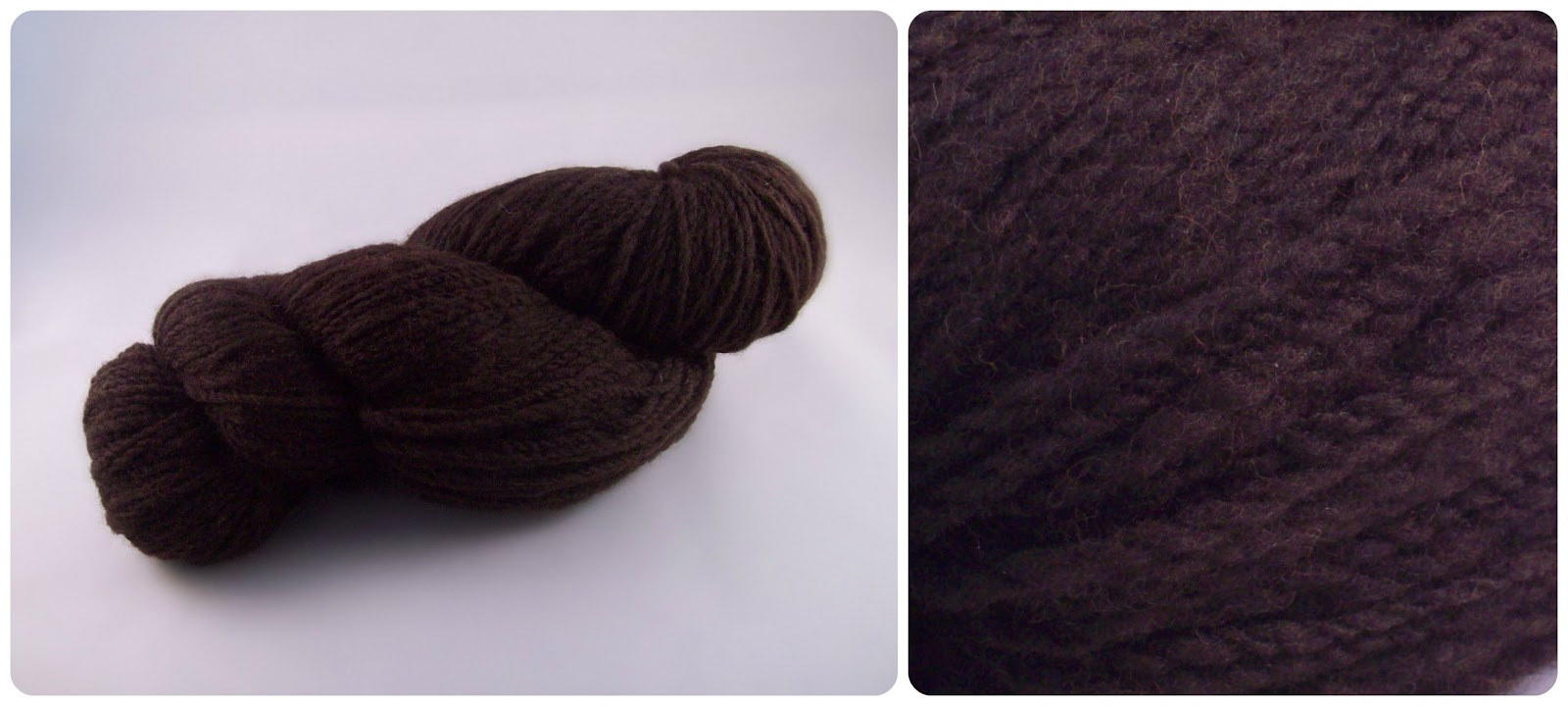
This is the black part of Fleece No.2, starting out with 800g of black fleece and being left with 366g after combing.  A yield of approximately 46%.

I didn't take photos of the preparation of this.  Its black and fluffy, you know what it looks like, you don't need photos of this, again and again.

I made 3 Sport weight skeins of yarn.

This one is 99g/376m

This one is 101g/351m

and lastly, this one is 149g/542m


Sunday, 15 November 2015

In waves of green - Design A193

After a very beautiful but intense knit of the beaded lilac shawl I wanted to make something a bit simpler and a bit thicker as we are heading into Winter and its getting cold outside.  I have some really nice Rowan Summer Tweed in various shades of green..  The yarn is aran weight and 70% Silk, 30% Cotton and is no longer manufactured so I have to be very careful and precise with my maths to ensure that I don't run out of yarn.  Maybe a motif design or something in stripes, or at least something that could be worked in stripes to produce an interesting effect.

I got out the skeins that I have of this yarn in five various shades of green and sorted them from dark to light.  There is obviously a cuckoo in the nest that was a completely different tone and just didn't fit in with the others and this was put back into my yarn stash and I proceeded with the four remaining shades.


Using a 6.5mm crochet hook I started this on 9th November with a row of foundation single crochet.  This is much easier than working a long chain of stitches first and then crocheting into them as you make the foundation chain and the stitch at the same time.  Here is a very good YouTube video on how to work a foundation single crochet.

The photos below show it laid out on my blocking boards before a soak and after a soak and pinned out.  I knew that the wrap would not grow width ways but I did expect it to grow length ways as the lace pattern was opened up.


Its a lovely soft shawl that is versatile and can be used as a wedding shawl or equally would look good casual with shirt and jeans or a summer dress.


Friday, 6 November 2015

Lilac Beaded Lace Shawl - Design L7

I wanted to make another spectacular shawl as I've not done any fine lace knitting for a while.  I chose a lovely lilac lace weight yarn that I got from Solstice Yarns, which is 50% Baby Suri Alpaca, 30% Merino and 20% Silk.  Suri alpaca is the rarer breed of alpacas, the one with the incredibly long hair, as opposed to the normal, fluffy, Huacaya alpaca that you are probably more familiar with.

I loved making the heavily beaded scalloped shawl that I made with my own hand-spun Shetland wool so much that I am going to make it again using this yarn and Size 8 Toho round seed beads in shade 928 Rainbow Rosaline Opaque.  I started knitting on 7th September.


I took lots of work-in-progress photos so you can see the shawl growing.


I finished this on 4th November 2015.  The pictured below show before soaking and blocking and during the blocking process.  Blocking really makes a difference to the finished item, especially so with lace shawls.


The alpaca/wool/silk blend is so lightweight and drapes beautifully.  There are 5,083 beads on this shawl and the beads weigh more than the yarn does.  I used 68g of yarn and the shawl weighed 185g, meaning that the beads weighed 117g.


Thursday, 29 October 2015

Can you over-dye black fleece or yarn?

I have spun loads of natural "black" yarn and just how black that yarn is depends on all sorts of factors including; breed of sheep, genetic strain of breed, amount of sunlight the fleece has been subjected to, general weathering and probably a whole host of other factors can contribute to just how black a black sheep is.

I was looking at all my skeins of handspun black yarn together and the variation in shade from chocolate brown to almost jet black and was wondering if it was possible to over-dye something this dark, having already had success with dyeing mixed coloured fleeces.  I asked around on various forums that I visit and, to be honest, not many people responded and out of those only one or two had even tried.  Hmmm, ok, its up to me to just give it a go then!

I took the two black skeins from Hillcrescent Farm Jacob Fleece No.4 and the black skein from Hillcrescent Farm Jacob Fleece No.6 to have a go at making them a little more interesting.

I started out overdyeing the No.6 black with Greener Shades dye in Amethyst Purple at 1% dye strength but this turned out to not be strong enough and so I dyed it again at the same level of dye, effectively making it a 2% dye strength, and whilst not perfectly even coloured, the result isn't too bad and you can see the difference between undyed and dyed in the top two photos.


I then took the worsted weight yarn from Fleece No.4 and over-dyed that with Greener Shades dye in River Blue at a dye strength of 2% and got an all over even toned shade.


Lastly, I took the double knit weight yarn from Fleece No.4 and over-dyed that using Greener Shades dye Ruby Red, again at a 2% dye strength, for a lovely dark red yarn.


So, yes, you can over-dye something that is dark in colour as long as you use a strong dark colour at a decent dye strength.  Its no good tickling it with a weak dye as you may as well throw that dye down the drain.  I think that it has made these yarns a lot more interesting and prettied them up.

Yes, yes, I know I messed up with this last photo as they're not in the same order, I'm only human.

Friday, 16 October 2015

Lincoln Longwool Lamb Part I - Maroon

I bought 1kg of Lincoln Longwool Lambs fleece in July 2014 from a guy in Sleaford, Lincs, who was selling quite a few of these fleece.

It arrived in "unusual" packaging, it was inside a cereal box which was wrapped in paper.  The packaging was dry on the outside but the fleece felt really damp and the locks felt heavy.  When it first arrived it was really filthy and after taking photographs of the fleece, I weighed it at 1kg and the put the fleece into a carrier bag and left it in our laundry room, leaving the bag open for the air to get to it and dry it out.  I weighed it again about 24 hours later and it had lost 100g in weight and smelt musty but was now quite dry, as you would expect it to have arrived.


I sorted through it and threw away 112g of rubbish and then washed it as soon as my hanging drier was available - it was summer and I take advantage of washing/drying/dyeing fleece whilst its dry and warm and so its almost in constant use.  I was left with 621g of clean fleece after washing and drying it.


This fleece was then stored for a while until, on 10th April 2015, I split the fleece into 3 equal parts and dyed each lot a different colour; maroon, deep violet and purple.

The first lot, I dyed using Colour Craft All In One Easyfix dye in Maroon.  I started out with 206g of fleece and after I had combed this I was left with about 150g of nests to be spun, a yield of almost 73%


This made a Light Fingering yarn, 140g/480m that has wonderful lustre.


There are two more lots of this fleece in other colours and I can't wait to get my hands on them.

Tuesday, 13 October 2015

Hillcrescent Farm Jacob Fleece No.3

I am really getting through these Jacob fleece this year.  This is Fleece No.3 from Hillcrescent Farm.

Sheared on 26th May 2013, this one weighed 1.05kg after I skirted it.  I think this is the photo of the correct sheep, its difficult trying to match fleece to sheep when you're not familiar with the animal.


After it was washed and dried I was left with 413g of black fleece and 230g of the mixed colours.  It wasn't worth trying to get white from this mostly coloured fleece.

The mixed colours

I decided to dye this fleece as I knew that the colour would take after dying another fleece.  I dyed this using Greener Shades dye in Ruby Red.  I dyed this back in March and finished making the yarn in April.


When I combed this the colours combined and it looked like a completely different colour.  Blending colours together really is like mixing paint.  I got 81g of combed top from the original 230g.


The finished yarn is sport weight and is 79g/371m.  I've name this Rosewood.


The Black Fleece

I didn't take any photos but I got 194g of nests from my original 413g of washed fleece.

I tried dying this fleece black using the last of my all-in-one-dyes as this fleece had a lot of sun-bleached tips.  I spun up this Worsted weight yarn, which is 97g/241m.  As you can see, thanks to the dye its a bit darker than usual.


I also spun up this sport weight yarn, which is 96g/415m.


And that is another fleece completely done.

Saturday, 15 August 2015

Hillcrescent Farm Jacob Fleece No.4, Part III

This is my third and final post about Jacob Fleece No.4 from Hillcrescent Farm.  This time I have been working on the black part of the fleece.

I didn't take any photographs of before or during, I just got straight on with the job.  If you read my blog regularly I'm sure by now what a black fleece looks like before and after being combed.

I started out with 364g of black fleece and after being combed I was left with 190g of nests to spin which I split into to amounts to make 2 skeins of yarn.

The top photo is worsted weight and is 90g/314m and the bottom photo is double knit weight and is 87g/337m.


That's another whole fleece completed.